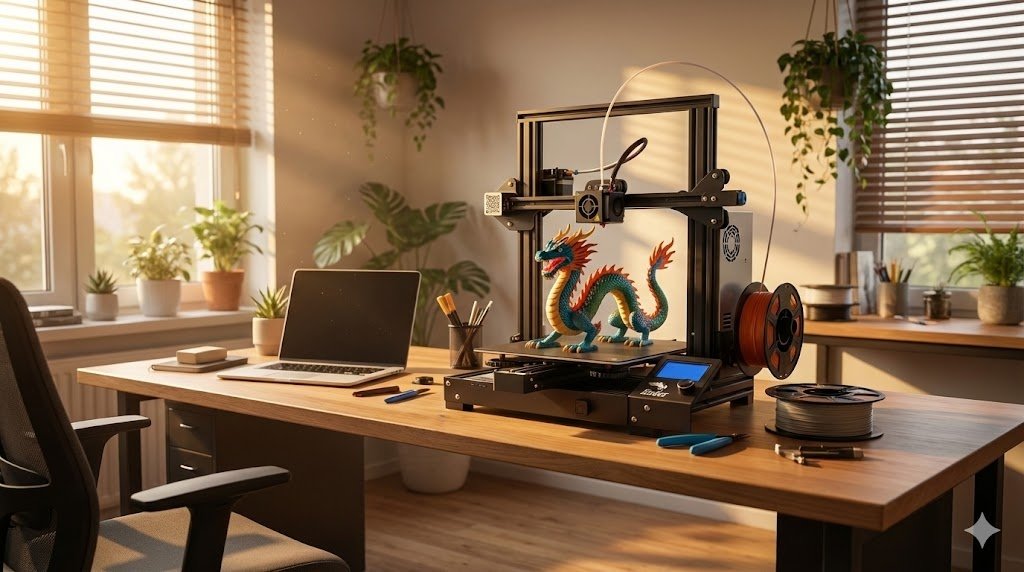
Hi, I’m Joakim, and welcome to TopGadgetGuide.net. For years, 3D printing felt like something out of a science fiction movie, reserved for engineers and big corporations. Today, that has completely changed. High-quality, user-friendly 3D printers are now incredibly affordable, allowing anyone to turn their digital ideas into physical objects. After diving into the top-rated and most beginner-friendly models on Amazon, I’ve created this guide to the 5 main types of 3D printers to help you choose the perfect one to start your creative journey.
(Want to know how I review my gadgets? Read my full review process here.)
Comparison Table (Top 3 Picks)
| Product Image | Product Name | Best for | Our Rating (out of 5) | Shop Now |
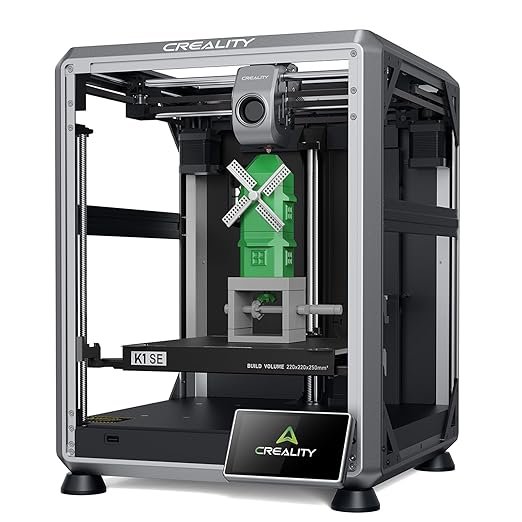 | The “Ready-to-Print” FDM Printer | The absolute easiest beginner experience | 4.8 / 5 |  |
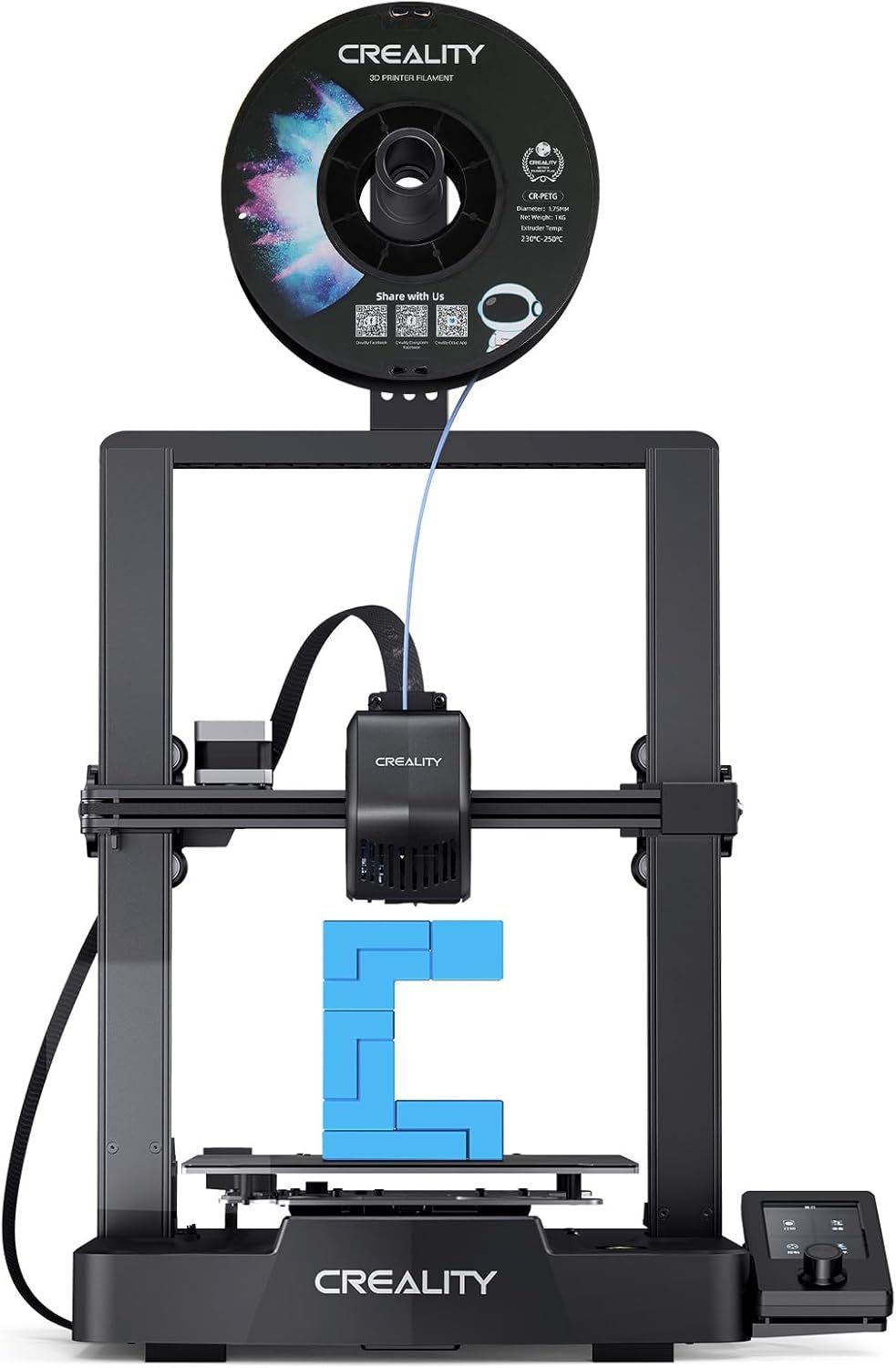 | The Budget-Friendly FDM Printer | Getting started for the lowest price | 4.6 / 5 | |
 | The Beginner Resin Printer | Printing highly detailed miniatures | 4.7 / 5 | |
Detailed Product Reviews
1. The “Ready-to-Print” FDM Printer
Our Top Pick: Creality K2 SE 3D Printer
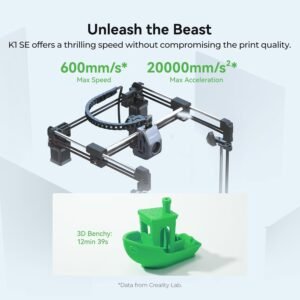
Quick Specs:
- Assembly: Minimal (Attach screen & holder)
- Leveling: Smart Auto-Leveling
- Speed: Up to 500mm/s
- Best For: Beginners wanting Speed & Quality
Description:
The Creality K2 SE is the definition of a modern, beginner-friendly 3D printer. Gone are the days of spending hours building a machine; here you simply attach the touchscreen and spool holder, and the printer handles the rest with guided auto-calibration. It features a rigid die-cast aluminum alloy frame which provides excellent stability—crucial for high-quality prints. It’s also incredibly fast, capable of printing at speeds up to 500mm/s, meaning you get your results much faster than with older entry-level models.+2
Pros:
- Plug & Play: Requires almost no assembly and uses smart auto-leveling to probe the print area for a perfect first layer.
- Rigid Build: The die-cast frame reduces vibration (ringing), creating smoother surfaces on your models.
- Future Proof: It is designed to be compatible with Creality’s Color Filament System (CFS), allowing you to upgrade to multi-color printing later if you wish.
Cons:
- CFS Separate: While advertised as “Multicolor Support,” the actual Color Filament System unit required for that feature is usually sold separately or in a specific combo.
- Build Volume: The 220x215mm build plate is standard size, but might feel small if you plan to print large cosplay helmets in one piece.
Why it’s on this list:
It combines the ease of a “ready-to-print” machine with the high performance and speed of a much more expensive printer, making it the perfect starting point.

2. The Budget-Friendly DIY FDM Printer
Our Top Pick: Creality Ender 3 V3 SE
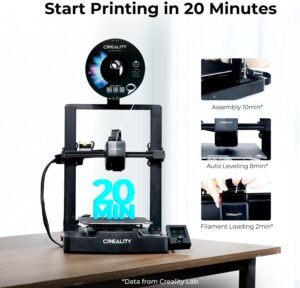
Quick Specs:
- Assembly: Simple Kit (approx. 20 mins)
- Speed: 250mm/s Max Speed
- Leveling: CR Touch Auto Leveling
- Best For: Learning & Value
Description:
For the beginner on a budget who doesn’t mind a little hands-on work, the Ender 3 V3 SE offers incredible value. While earlier “budget” printers required hours of complex assembly, this modern version comes mostly pre-assembled and can be put together in about 20 minutes. Despite the low price, it includes premium features like a direct drive extruder (great for flexible filaments) and auto-bed leveling. Since you will be assembling parts of this machine yourself, having a reliable [Top Best Precision Screwdriver Kits on Amazon] makes the process smoother.
Pros:
- Unbeatable Price: You get a highly capable, modern machine for a fraction of the cost of premium brands.
- Direct Drive: Comes with a Sprite Direct Extruder, which is much more reliable and less prone to clogging than older bowden tube systems.
- Easy Assembly: A massive improvement over older DIY kits; designed to be built quickly even by novices.
Cons:
- Open Frame: The open design means it can be a bit noisier and less protected from drafts than enclosed printers.
- Manual Screen: Uses a knob-operated screen rather than a modern touch interface, which feels a bit old-school.
Why it’s on this list:
It offers the absolute best performance for the price, striking the perfect balance between a DIY learning experience and modern convenience.
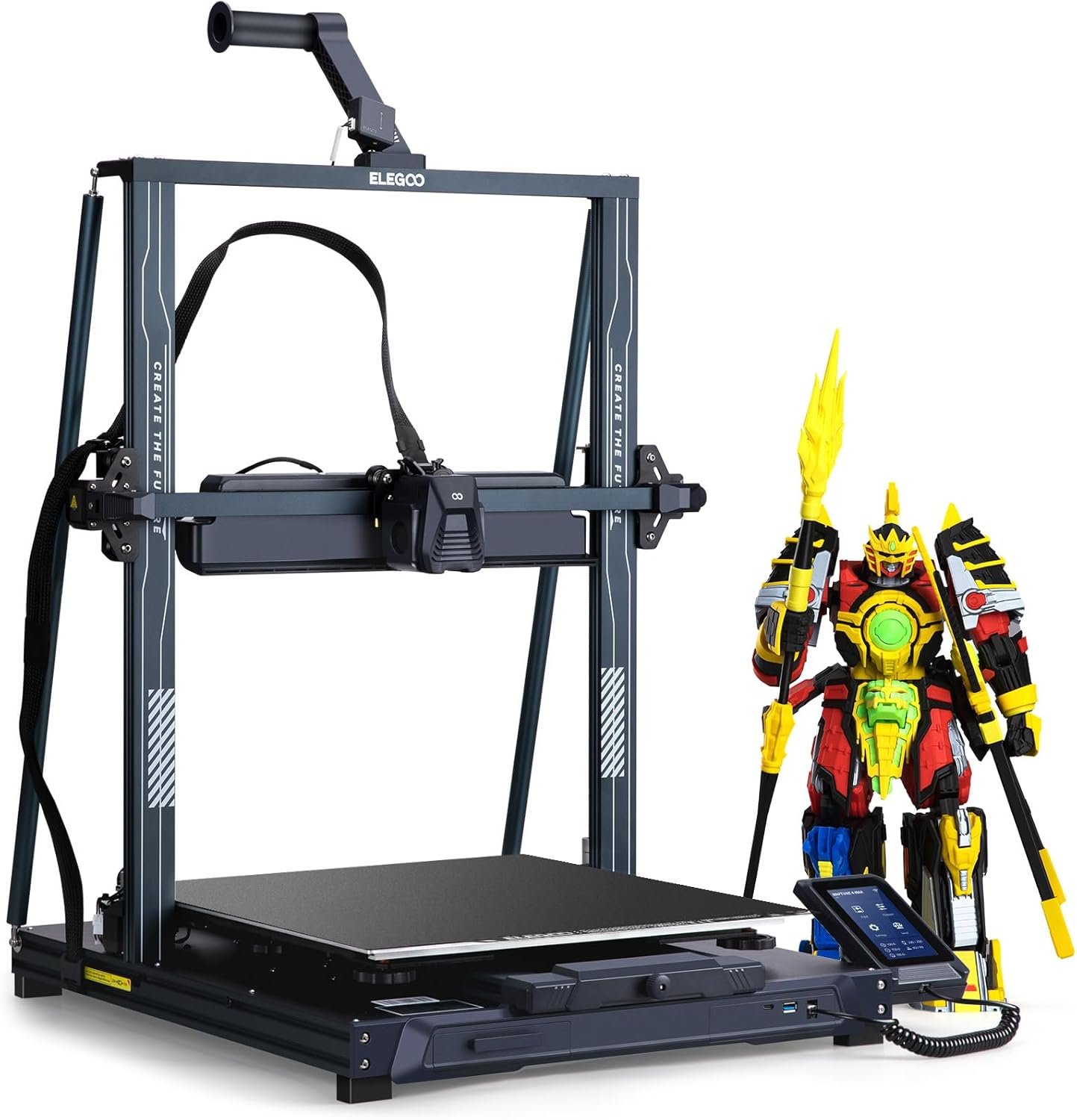
3. The Large Volume FDM Printer
Our Top Pick: ELEGOO Neptune 4 Max
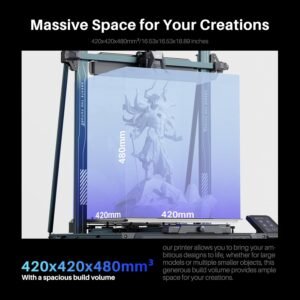
Quick Specs:
- Build Plate: Massive 420 x 420 x 480 mm
- Speed: Up to 500mm/s (Klipper Firmware)
- Extruder: Direct Drive (Handles TPU well)
- Best For: Cosplay Helmets & Large Props
Description:
If your dream is to print full-sized cosplay helmets, armor pieces, or large architectural models in a single piece, the standard printers just won’t cut it. The ELEGOO Neptune 4 Max offers a gargantuan build volume of 420x420x480mm, giving you the freedom to print huge objects without having to cut them into smaller parts and glue them together. These large printers are ideal for creating custom display stands to show off your collection, such as your [The 5 Best Star Wars Gadgets on Temu] lightsaber.
Pros:
- Massive Scale: You can print a life-size Stormtrooper helmet in one go, which is impossible on smaller machines.
- High Speed: Combines size with speed thanks to input shaping and advanced acceleration control.
- Dual Cooling: Features a heavy-duty auxiliary cooling fan array to cool layers instantly when printing fast.
Cons:
- Footprint: This is a beast of a machine; make sure you have a large, sturdy desk to put it on.
- Noise: The powerful cooling fans required for high-speed printing can be quite loud.
Why it’s on this list:
It is the undisputed king of size for beginners, offering professional-grade volume and speed at a hobbyist price point.
4. The High-Speed FDM Printer
Our Top Pick: Sovol SV08 High-Speed 3D Printer
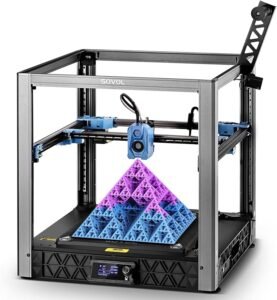
Quick Specs:
- Speed: Max 700mm/s (CoreXY Structure)
- Build Volume: Generous 350 x 350 x 345 mm
- Features: Built-in Camera & Quad Gantry Leveling
- Best For: Speed Freaks & Tech Enthusiasts
Description:
If you feel the “need for speed,” the Sovol SV08 is in a league of its own. It uses a professional CoreXY structure (where the bed remains stationary while the print head moves), allowing for blazing fast print speeds of up to 700mm/s without sacrificing quality. Unlike standard printers, it features “Quad Gantry Leveling” with four independent motors, ensuring the nozzle is perfectly aligned with the bed at all times. It even runs on open-source Klipper firmware right out of the box and includes a built-in camera so you can monitor your prints remotely or create cool time-lapse videos.
Pros:
- Insane Speed: Capable of printing significantly faster than almost anything else in its price range.
- Smart Features: The included camera and AI-ready software make monitoring your prints easy.
- Stability: Uses linear rails on all axes and a heavy-duty frame to minimize vibrations at high speeds.
Cons:
- Footprint: It is a large and heavy machine (over 39 lbs), so you need a sturdy, dedicated workspace.
- Noise: Moving air and motors at these high speeds inevitably creates more noise than a slower printer.
Why it’s on this list:
It brings industrial-level speed and top-tier features (like QGL and a camera) down to a price point accessible for beginners who want the absolute fastest performance.
5. The Beginner Resin (SLA/DLP) Printer
Our Top Pick: ELEGOO Mars 5 Ultra 9K
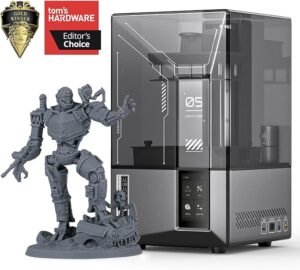
Quick Specs:
- Resolution: 9K Ultra-High Definition
- Smart Features: AI Camera & WiFi Transfer
- Leveling: Auto-Leveling (Tilt Release)
- Best For: D&D Miniatures & Extreme Detail
Description:
If your goal is to print tiny, incredibly detailed miniatures for Dungeons & Dragons or jewelry prototyping, a standard plastic printer won’t cut it. The ELEGOO Mars 5 Ultra uses liquid resin and UV light to create layers so thin they are invisible to the naked eye. The chemical fumes can be quite strong, so I strongly recommend running one of [The 5 Best Air Purifiers on Amazon] in your workspace to keep the air clean and safe. This specific model features “Tilt Release” technology for reliable printing and an AI camera that watches your print to prevent failures.
Pros:
- Incredible Detail: The 9K resolution screen produces sharp, smooth surfaces that look like injection-molded plastic.
- Smart Tech: The AI camera detects failures early, and WiFi lets you send files directly from your computer.
- Beginner Friendly: Features auto-leveling and a smart mechanical sensor to handle calibration for you.
Cons:
- Resin Handling: Liquid resin is sticky, smells, and requires safety gloves and a well-ventilated room.
- Post-Processing: Unlike other printers, the finished parts must be washed in alcohol and cured with UV light.
Why it’s on this list:
It takes the messy, complicated world of resin printing and makes it smarter, safer, and much easier for a first-time user to master.
My Final Recommendation
For the true beginner who wants the highest chance of success with the least amount of frustration, my top recommendation is The Easy Start: “Ready-to-Print” FDM Printer (Product 1, Creality K2 SE).
While a DIY kit offers great value, the inclusion of features like true auto-bed leveling and high-speed printing in a pre-assembled machine removes the steepest part of the learning curve. It allows you to experience the magic of seeing your digital creations come to life within minutes of opening the box, which is the most powerful and motivating way to start your 3D printing adventure.
However, if your main passion is tabletop gaming and painting miniatures, the Detail Master (Product 5) is the only choice that will give you the quality you need.

Joakim (A.K.A 'JBH85') is the founder and editor of TopGadgetGuide.net, a site dedicated to simplifying tech and gadget guides. He conducts deep research and careful curation to bring you honest, unbiased, and easy-to-understand recommendations. His goal is to help you buy with complete confidence.
(Want to know exactly how he works? Read his full 'Review Process' here.)